



LTC4/CysLT2
LTC4/CysLT2 (CYSLTR2) is a cysteinyl leukotriene signaling axis that regulates inflammatory and vascular responses through a G protein-coupled receptor predominantly coupled to Gq/11-dependent signaling pathways[3][4]. CysLT2 functions as a receptor for cysteinyl leukotrienes and contributes to leukotriene-induced modulation of smooth muscle contraction, vascular permeability, and leukocyte activation, placing this pathway at the center of allergic and inflammatory biology[3]. Mechanistically, LTC4 activates CysLT2-dependent cellular responses, including calcium signaling in endothelial cells and cytokine-associated inflammatory programs in immune cells and platelets[5][6][1]. In disease settings, CysLT2 signaling has been linked to eosinophilic type 2 immunopathology, aspirin-exacerbated respiratory disease-like inflammation, dermatitis-associated itch responses, and allergic airway disorders[1][2][7]. Compared with the closely related CysLT1 receptor, CysLT2 displays distinct pharmacological and biological properties; CysLT2 can negatively regulate CysLT1-dependent pulmonary Th2 inflammation, and several classical CysLT1 antagonists, including montelukast, show little or no activity at CysLT2[3][6]. This functional divergence is important for experimental design because receptor-selective signaling may influence inflammatory outcomes independently of CysLT1 pathways[6]. For research applications, selective CysLT2 antagonists have been reported to block vascular permeability and myocardial ischemia/reperfusion injury in experimental models, providing useful tools for mechanistic studies of leukotriene biology and inflammatory disease processes[3].
References:
- [1]. Liu T, et al. Cysteinyl leukotriene receptor 2 drives lung immunopathology through a platelet and high mobility box 1-dependent mechanism. Mucosal Immunol. 2019 May;12(3):679-690. [Content Brief]
- [2]. Voisin T, et al. The CysLT2 R receptor mediates leukotriene C4 -driven acute and chronic itch. Proc Natl Acad Sci U S A. 2021 Mar 30;118(13):e2022087118. [Content Brief]
- [3]. Guide to pharmacology. Database.
- [4]. Sarau HM, et al. Identification, molecular cloning, expression, and characterization of a cysteinyl leukotriene receptor. Mol Pharmacol. 1999 Sep;56(3):657-63. [Content Brief]
- [5]. Sjöström M, et al. Dominant expression of the CysLT2 receptor accounts for calcium signaling by cysteinyl leukotrienes in human umbilical vein endothelial cells. Arterioscler Thromb Vasc Biol. 2003 Aug 1;23(8):e37-41. [Content Brief]
- [6]. Yokomizo T, et al. Leukotriene receptors as potential therapeutic targets. J Clin Invest. 2018;128(7):2691-2701.
- [7]. Neves JS, et al. Cysteinyl Leukotrienes in Eosinophil Biology: Functional Roles and Therapeutic Perspectives in Eosinophilic Disorders. Front Med (Lausanne). 2017;4:106.
-
LTC4/CysLT2 Related Products (23)
Related Products (23)

- 1
- 2
-
BRI-12349
 0 ImagesCat. No.: HY-176920CAS No.: 920707-33-1
-
LM-1484
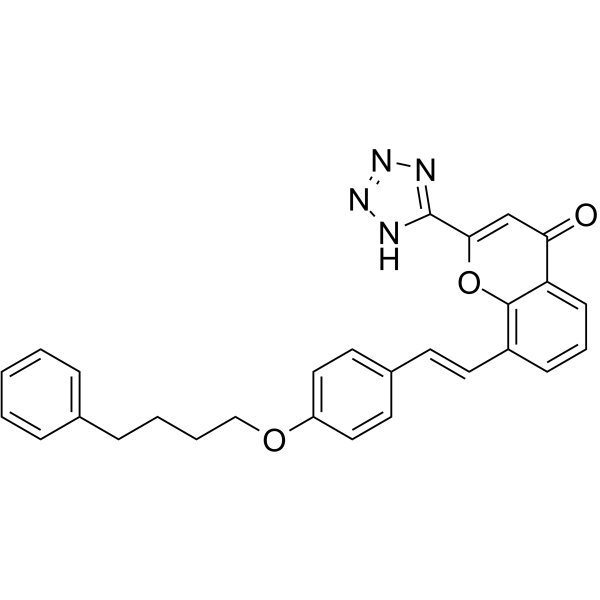 0 ImagesCat. No.: HY-101686CAS No.: 197506-02-8LM-1484 is an antagonist of CysLT1 receptor and displays a higher affinity for 3H-LTC4 sites.
-
CI-949
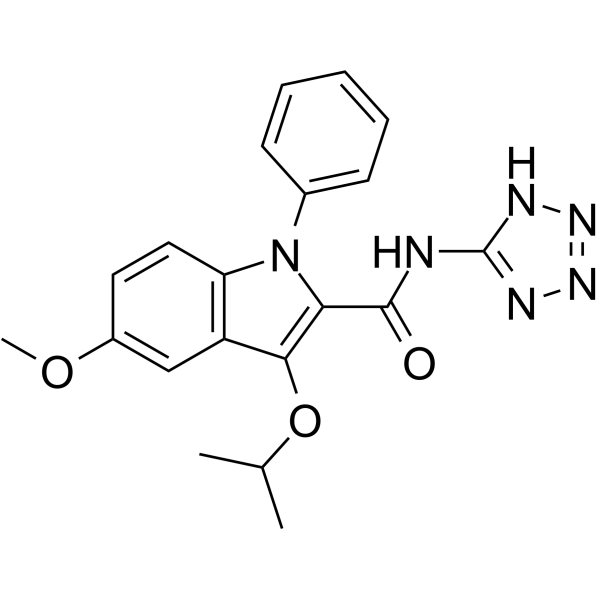 0 ImagesCat. No.: HY-U00364CAS No.: 104961-19-5CI-949 is an allergic mediator release inhibitor, which inhibits histamine, leukotriene C4/D4 (LTC4/LTD4), and thromboxane B2 (TXB2) release with IC50s of 11.4 μM, 0.5 μM and 0.1 μM, respectively.
- 1
- 2



